Our simulation studio enables intelligent, human-in-the-loop testing for robotics and automotive systems, supporting the transition toward Web 4.0 intelligence and Industry 5.0 values, and allowing complex systems to be designed, validated, and optimized safely, sustainably, and efficiently before physical deployment.
Physics-aware agents that perceive, decide, and act through realistic forces, constraints, and sensor feedback.
High-fidelity virtual replicas of real-world assets or environments used for analysis, optimization, and continuous validation
Integration of logs, sensor data, and trajectories from deployed systems to ground simulation in reality
Scalable creation of labeled data, including rare, unsafe, or hard-to-capture scenarios.
Systematic variation of physics, visuals, and environment parameters to improve robustness and generalization
Emulating sensors like cameras, LiDAR, radar, or IMUs to train and test AI perception modules.
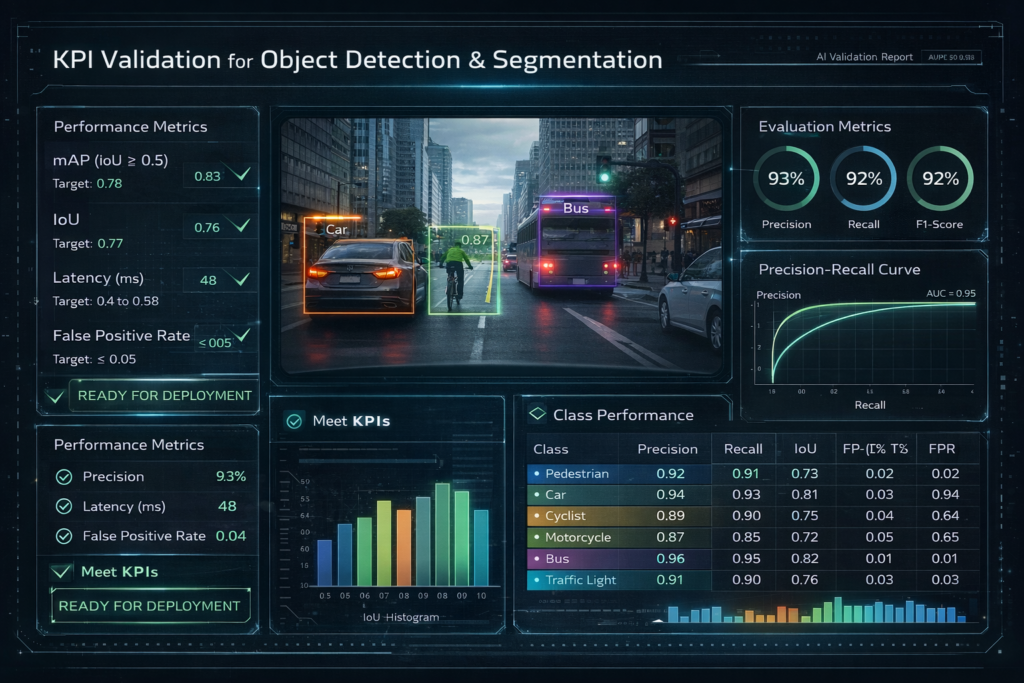
We analyse AI vision models to identify failure conditions in extreme environments. Where robotic AI systems fall short, the tool generates targeted synthetic training data to improve model performance and resilience.
At Immersiverse, we go beyond traditional simulation by integrating Extended Reality (XR) features, thus offering a fully immersive experience for AI engineers and developers or a variety of industrial sectors.
We create digital twins of warehouses where robots, integrated with sensors, are tested and monitored. This setup enables realistic simulation, data collection, and optimisation of robotic systems before real-world deployment.
We generate edge-case scenarios, collect high-quality data, and train AI models in a closed-loop system for rigorous testing and validation, ensuring robust performance in real-world automotive environments
Enabling the creation of precise dataset of millions of images in a single day, revolutionizing the pace of AI development
Iterate and refine AI vision models, streamlining the development process for quicker deployment and optimal performance.
Reduces costs by enabling AI vision systems to train and optimize in a virtual environment, sparing expensive real-world data collection and hardware expense
we ensure that your sensitive information remains protected without compromise.
Ensures safety for AI vision systems by allowing them to learn and adapt in controlled virtual environments, minimizing the risk associated with real-world experimentation and potential harm
our simulation-driven approach empowers AI vision systems to effortlessly adapt to evolving demands, ensuring seamless integration and robust performance at any scale